
Katja Wagner · 16 September 2026
Dorset's Quiet Quarries: How Stone Extraction Shapes Local Ecosystems and Traditions
Stone extraction in Dorset has operated quietly for centuries, and observers note that sites around Portland and Purbeck continue to supply limestone while altering habitats and preserving craft skills. Extraction activities began in Roman times, and records show that quarries expanded significantly during the medieval period when local stone built cathedrals and castles across southern England.
Geological Background and Current Operations
Dorset’s Jurassic limestone beds formed millions of years ago, and geologists describe these layers as ideal for dimension stone because they split cleanly into blocks. Active quarries today follow strict licensing rules set by the Mineral Planning Authority, and operators must submit restoration plans before new phases begin. Data from the British Geological Survey indicates that annual output from Dorset sites remains modest compared with larger UK regions, yet the material retains high value for restoration projects and new construction.
Ecological Changes Linked to Extraction
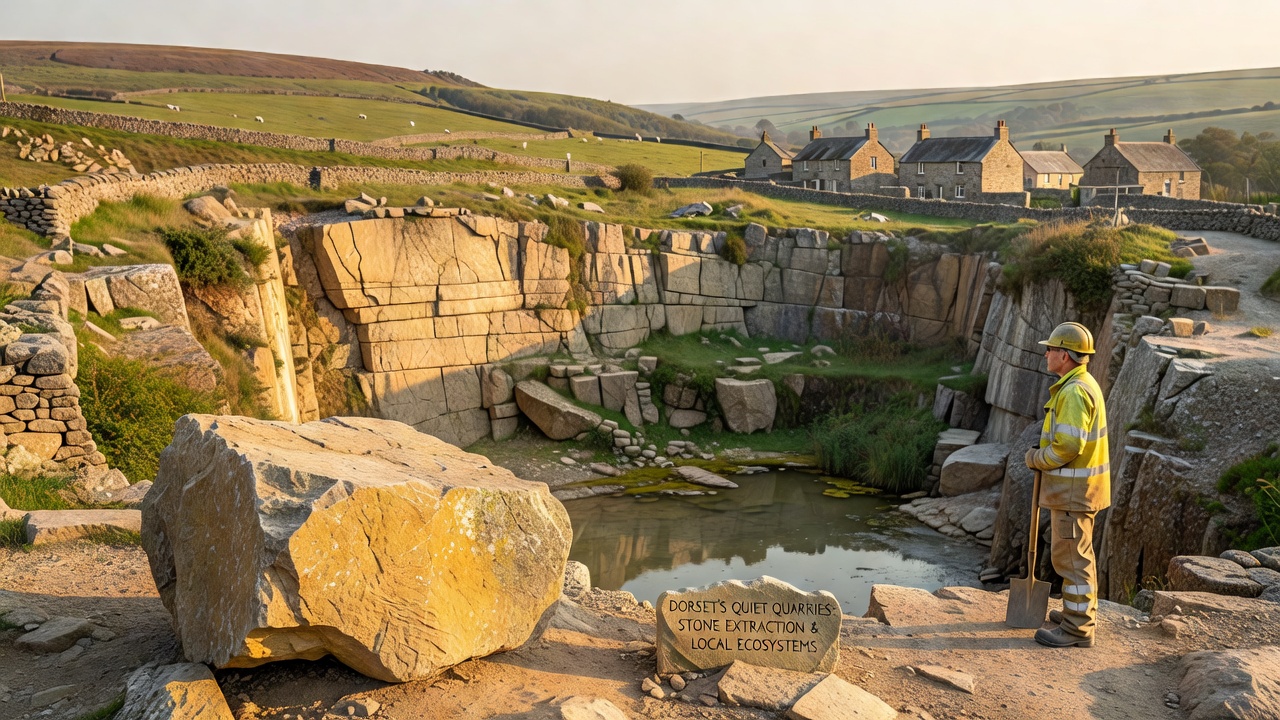
Quarrying removes topsoil and vegetation, which creates open rock faces that support specialised plants and invertebrates. Studies published by the University of Exeter found that disused quarry floors in Dorset host rare orchids and bee species that struggle in surrounding farmland. Active extraction zones temporarily reduce nesting sites for ground birds, yet operators now leave buffer strips of undisturbed ground to maintain connectivity for wildlife corridors.
Water management presents another factor, since blasting and crushing can affect local groundwater flows. Monitoring reports compiled by the Environment Agency record that modern sites install settlement lagoons to prevent sediment reaching nearby streams, and these measures have kept downstream water quality within acceptable limits in recent years. Restoration after extraction often includes shallow scrapes that later become seasonal ponds, and ecologists report increased amphibian populations within five years of site closure.
Traditions Rooted in Stone Working
Stone masonry skills have passed through generations in Dorset villages, and training programmes run by local colleges combine modern health and safety standards with older hand-tool techniques. Apprentices learn to read the grain of Portland stone, and many continue working on heritage buildings where matching the original texture matters. Community events still mark the start of new quarry faces with small ceremonies that reference medieval customs, although these gatherings now also highlight environmental management plans.
Local archives show that families once lived beside the quarries in cottages built from waste stone, and some of those structures remain occupied today. The craft economy extends beyond extraction itself, since masons, carvers, and suppliers support one another through shared workshops and seasonal contracts. Figures released by the Mineral Products Association reveal that skilled labour shortages affect the sector, prompting partnerships with schools to introduce quarry careers earlier in the curriculum.
Regulatory Framework and Future Timelines
Planning permissions for Dorset quarries typically last fifteen to twenty years, and each renewal requires updated ecological surveys. A scheduled review of several licences is due in September 2026, when authorities will assess whether biodiversity targets set in earlier consents have been met. Operators must demonstrate measurable gains in habitat quality, and independent auditors verify compliance before extensions are granted.
International comparisons appear in academic papers that examine limestone quarries in Ontario and Western Australia, where similar restoration techniques have produced measurable increases in native plant cover within a decade. Dorset planners reference these examples when setting aftercare conditions, and the resulting policies encourage the creation of species-rich grassland rather than simple grass seeding.
Conclusion
Stone extraction continues to influence both the physical landscape and the cultural practices of Dorset communities. Monitoring data and restoration records demonstrate that ecological adjustments occur alongside ongoing production, while traditional skills remain embedded in the local economy. As licence reviews approach in 2026, stakeholders will evaluate how well current practices balance resource needs with habitat recovery and heritage preservation.