Ulrich Peters · 28 October 2026
Dorset Villages Revive Ancient Market Traditions Through Modern Community Exchanges Along Hidden Valley Routes
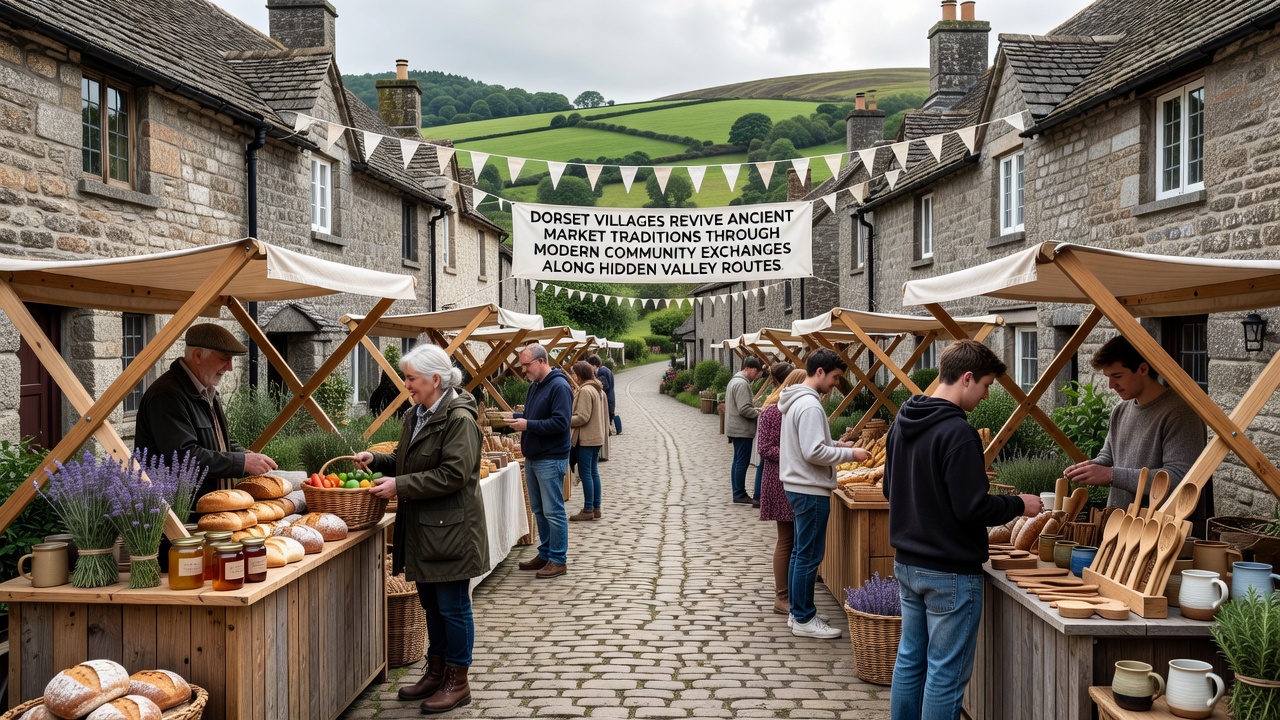
Dorset villages have drawn on centuries-old market practices while incorporating contemporary community exchanges that follow established paths through secluded valleys, and this approach connects rural settlements with shared resources and local produce in structured ways that data from regional surveys continue to track. Observers note that these routes, many of which trace back to medieval trade corridors, now host regular gatherings where residents swap goods, skills, and information without relying on conventional retail channels.
Historical Foundations of Valley Markets
Market activity along Dorset's valley networks dates to the 12th century when livestock, wool, and grain changed hands at seasonal gatherings, and records compiled by Historic England document how these sites operated under royal charters that regulated timing and taxation. Traders moved between settlements using footpaths that avoided exposed ridges, a pattern that reduced exposure to weather and theft while linking hamlets across the chalk downs and clay vales.
By the 18th century, improved roads began to shift some commerce toward larger towns, yet smaller exchanges persisted in hidden valleys where communities maintained informal barter systems for dairy, honey, and woven goods. Studies from regional archives show that these practices never fully disappeared, even as industrial agriculture expanded in the 20th century.
Hidden Valley Routes in Current Use
Current exchanges follow mapped trails that include sections of the Wessex Ridgeway and lesser-known side paths through the Frome and Piddle valleys, and these corridors allow participants to transport goods by foot, bicycle, or small cart without crossing major roads. Mapping projects completed in 2024 identified over 40 active segments still suitable for regular use, with signage installed by local heritage groups to mark entry points near villages such as Cerne Abbas and Sydling St Nicholas.
Participants coordinate dates through community notice boards and digital platforms, and gatherings occur on alternating weekends to avoid overlap with formal farmers' markets in Dorchester or Bridport. The arrangement supports direct transfers of seasonal items including apples, cheese, and seedlings, while also circulating tools and repair services among residents.
Modern Adaptations and October 2026 Schedule
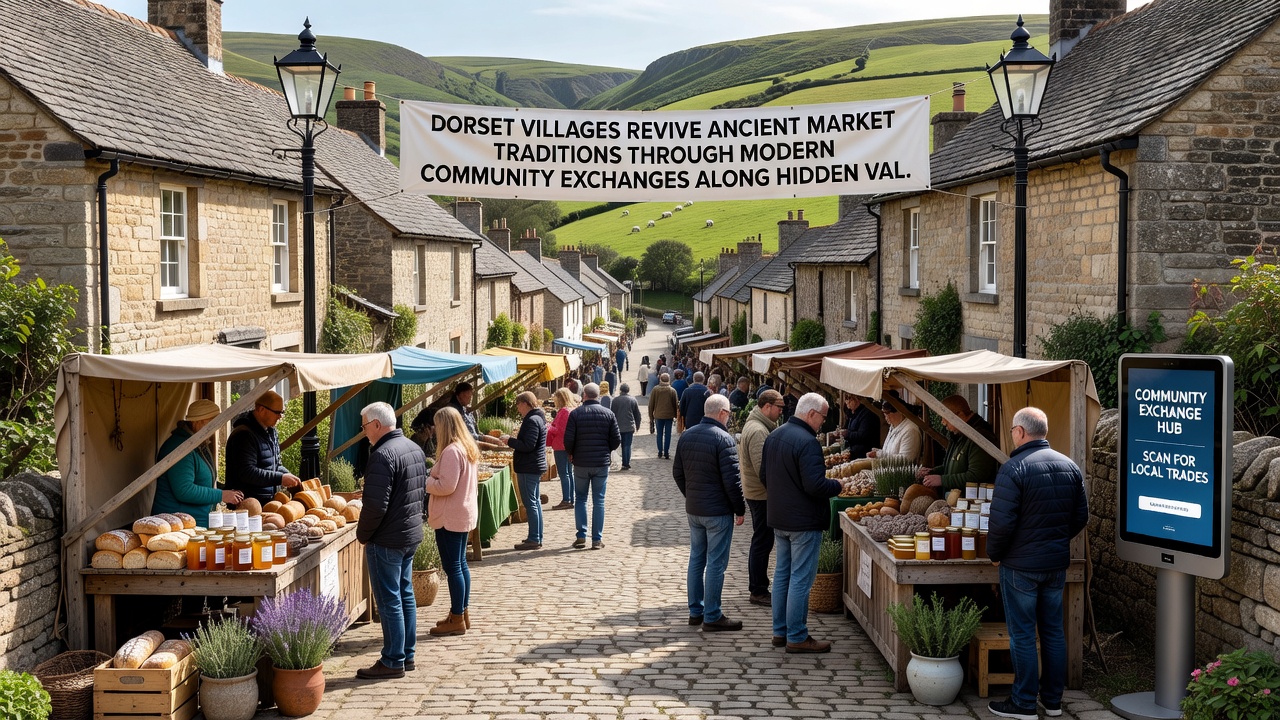
Digital tools now supplement traditional word-of-mouth announcements, allowing organizers to publish route updates and inventory lists ahead of each event, and this hybrid method has expanded participation to include residents from adjacent parishes. Data collected by Dorset Council in 2025 indicated a 27 percent rise in registered exchanges compared with the previous year, with emphasis on sustainable packaging and reduced vehicle use along the trails.
October 2026 features an expanded series of exchanges scheduled for the second and fourth weekends, timed to coincide with harvest completion and the start of winter preservation activities, and these dates align with similar heritage events tracked across western England. Organizers have incorporated workshops on seed saving and natural dyeing that draw on documented 19th-century techniques preserved in local museum collections.
Community and Economic Effects
Local records show that households participating in valley exchanges report measurable reductions in grocery expenditures, particularly for perishable produce during peak seasons, and these savings compound when groups share bulk purchases of staples such as flour and salt. Research compiled through European cultural heritage programs highlights parallel outcomes in comparable rural networks where informal trade complements formal markets without displacing them.
Younger residents have joined older participants in recent cycles, bringing knowledge of online coordination while learning historical preservation methods for root vegetables and fruit, and this intergenerational transfer appears in attendance logs kept by village halls. Infrastructure improvements remain minimal, consisting mainly of reinforced stiles and drainage repairs funded through parish grants.
Conclusion
The revival of Dorset valley market traditions through structured community exchanges demonstrates how historical routes continue to serve practical functions when adapted to current needs, and ongoing documentation from regional bodies provides baseline measurements for future comparisons. Participation patterns observed through 2026 will supply additional data on the long-term viability of these hybrid systems across similar landscapes.