Yara Hayes · 11 November 2026
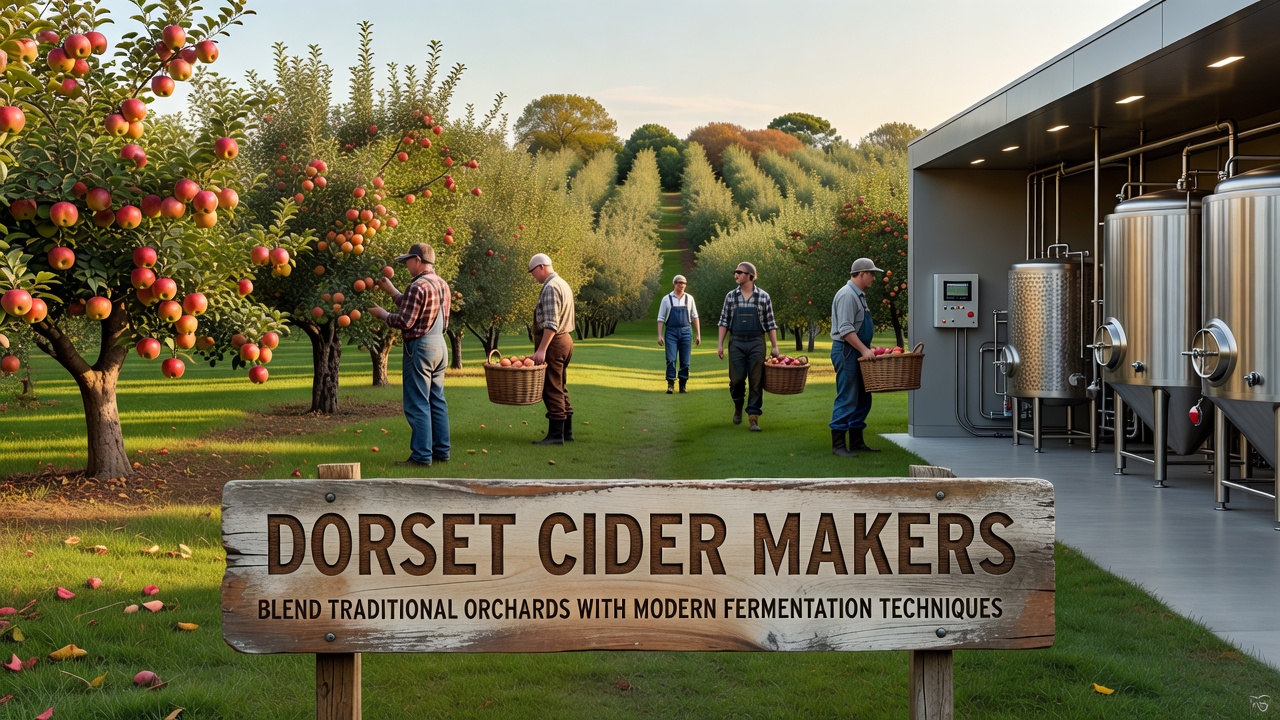
Dorset Cider Makers Blend Traditional Orchards with Modern Fermentation Techniques
Dorset cider production draws on centuries-old orchard practices while incorporating contemporary fermentation methods that allow precise control over flavor profiles and consistency across batches. Local growers maintain heritage apple varieties in established orchards scattered across the county's valleys and hillsides, where soil conditions and climate support specific fruit characteristics essential for traditional cider styles. These orchards feature trees planted decades ago alongside newer plantings that preserve genetic diversity from older stock, ensuring a steady supply of bittersweet and sharp apples required for balanced ciders.
Orchard Heritage and Cultivation Practices
Traditional orchards in Dorset often consist of standard trees spaced widely to allow understory grazing by livestock, a method that supports biodiversity and reduces the need for mechanical mowing in many locations. Data from agricultural surveys indicate that these mixed systems contribute to soil health through natural nutrient cycling, while producers select varieties such as Dabinett and Kingston Black for their tannin content that develops during slow maturation on the tree. Observers note that harvest timing aligns with peak ripeness in late autumn, with fruit collected by hand in smaller operations or mechanically shaken in larger ones to minimize bruising that could affect fermentation outcomes.
Modern orchard management integrates these longstanding approaches with targeted interventions like integrated pest management and soil testing that guide precise fertilizer applications. Researchers at regional agricultural centers have documented how such practices sustain yields without expanding land use, preserving the compact footprint of Dorset's cider apple groves. In November 2026 several estates plan coordinated harvests timed with predicted weather patterns to optimize sugar levels before pressing begins.
Fermentation Advances and Process Integration
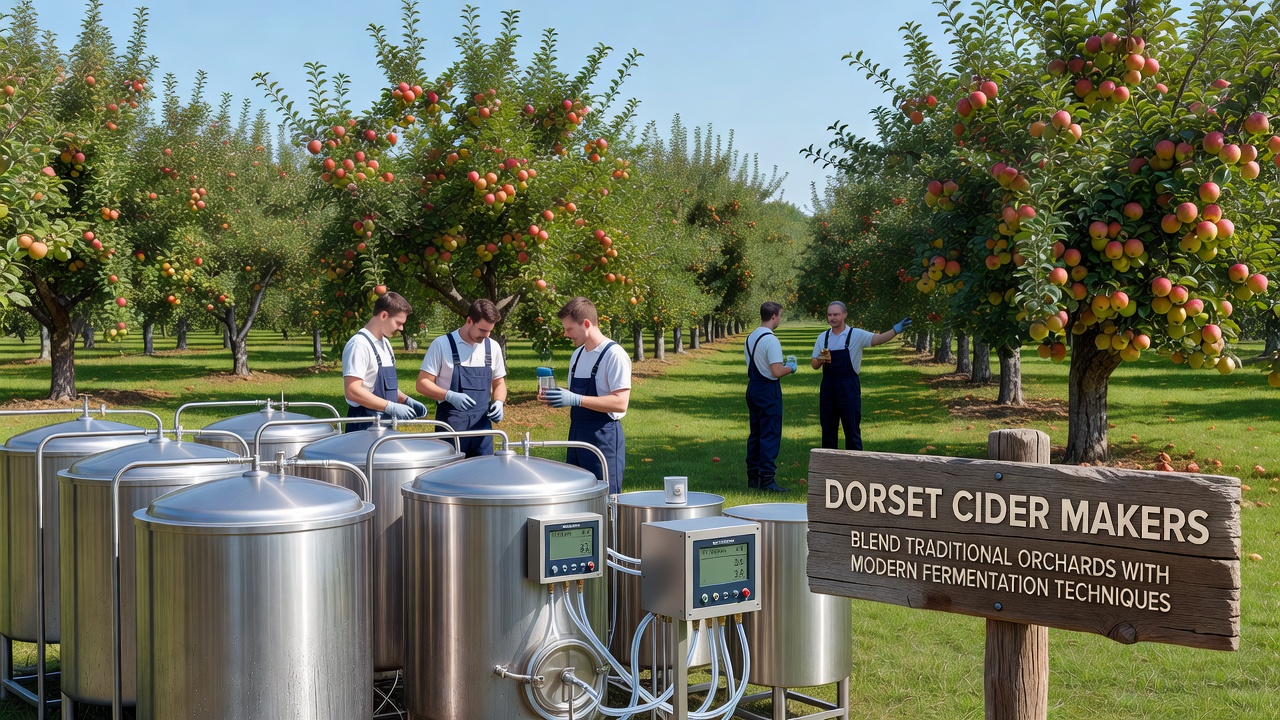
Once pressed, the juice moves into controlled fermentation environments where temperature regulation, selected yeast strains, and monitoring equipment replace the variable conditions of open vats used in earlier eras. These techniques permit makers to manage alcohol development and residual sugars more reliably, resulting in ciders that retain regional character while meeting contemporary quality standards demanded by distributors. Equipment suppliers report increased adoption of stainless steel tanks with glycol cooling jackets and digital sensors that track pH and gravity in real time.
Blending occurs after primary fermentation, when batches from different orchard blocks or apple mixes are combined to achieve target acidity and tannin balance. Producers often draw on laboratory analysis to inform decisions that once relied solely on tasting, allowing adjustments that maintain consistency from one season to the next despite variations in weather or fruit composition. Industry reports from the National Association of Cider Makers highlight how such data-driven methods support export growth, with Dorset ciders appearing on shelves in markets across Europe and North America.
Regional Examples and Production Trends
One cidery near Bridport combines fruit from 50-year-old trees with newer plantings managed under low-input regimes, then ferments small lots separately before assembling the final blend in chilled tanks. Another operation in the Blackmore Vale employs wild yeast starters alongside cultured strains to develop layered aromas while using membrane filtration to stabilize the finished product without pasteurization. Production figures released by county agricultural offices show steady output increases over the past decade, driven in part by tourism interest that brings visitors to tasting rooms and orchard walks.
Supply chain data reveals that packaging innovations such as keg systems and recyclable cans extend shelf life and reduce transport emissions compared with earlier glass bottle reliance. Makers coordinate with local hauliers to move bulk juice between pressing sites and fermentation facilities, minimizing handling steps that could introduce oxygen. Studies conducted by the University of Guelph's food science department on similar temperate-climate fruit fermentations provide comparative benchmarks that Dorset producers reference when refining their protocols.
Regulatory Context and Market Position
UK regulations on cider strength and labeling require accurate declaration of ingredients and alcohol content, prompting many makers to adopt laboratory verification as standard practice alongside traditional recipe knowledge. Compliance documentation often includes traceability records that link specific orchard blocks to finished bottles, a system facilitated by digital inventory tools. Export documentation aligns with requirements from destination countries, including those administered by bodies such as Agriculture and Agri-Food Canada for shipments reaching that market.
Seasonal events scheduled for late 2026 include open days where visitors observe pressing and early fermentation stages, offering direct insight into how heritage fruit moves through updated equipment. These gatherings also feature tastings that demonstrate the range achievable when traditional orchard outputs meet controlled fermentation parameters.
Conclusion
Dorset cider makers continue to rely on established orchard systems for their raw materials while applying modern fermentation controls that enhance repeatability and market reach. Production records and technical reports document the integration of these elements across multiple sites, supporting both local consumption and wider distribution. As equipment and analytical methods evolve, the county's cider sector maintains connections to its agricultural roots through sustained orchard management and variety preservation.